
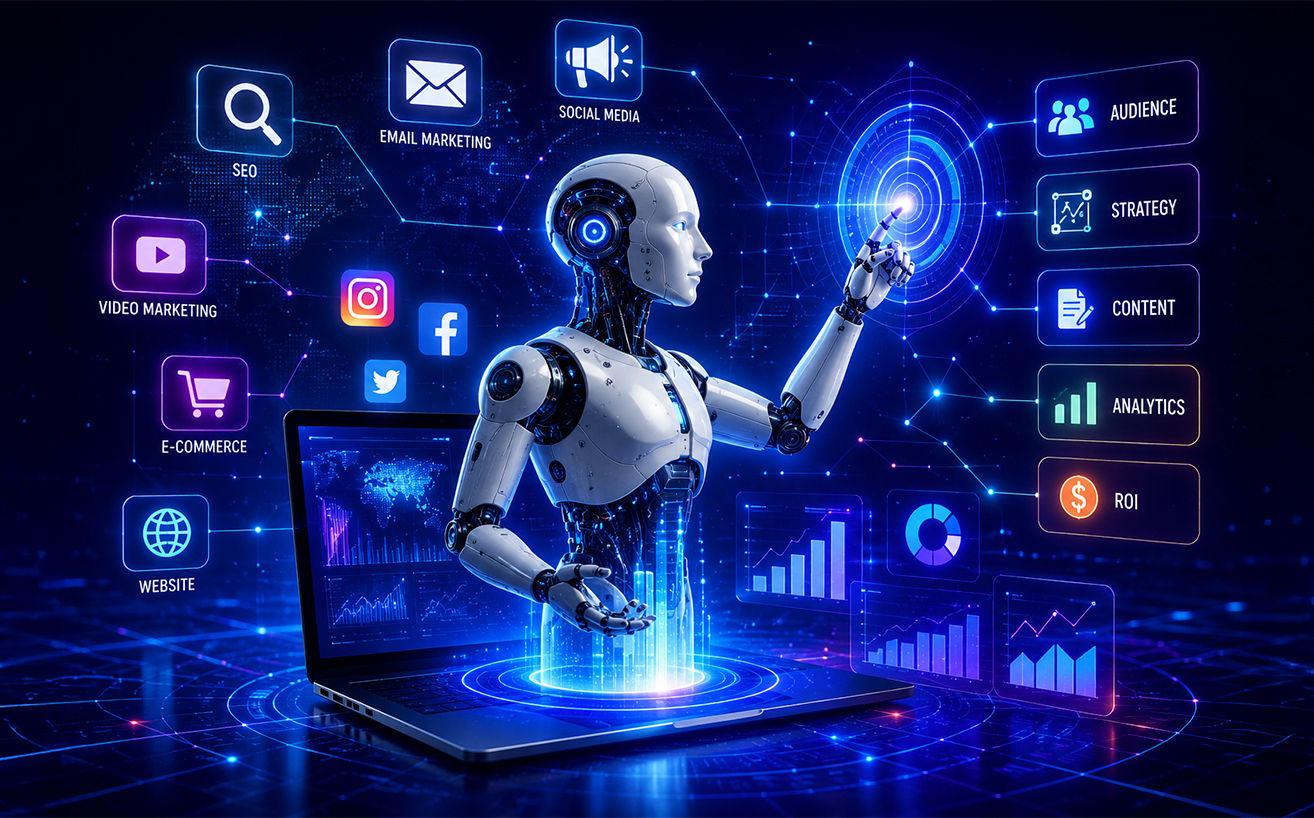
Why AI in Marketing Can’t Be Ignored Anymore
Most businesses are already using AI, even if they do not realize it. Every time a user sees a personalized ad, receives a product recommendation, or interacts with a chatbot, AI is at work.
The real shift is not adoption. It is how effectively businesses are using it.
Today, marketing is driven by speed, data, and relevance. AI helps companies move faster, understand customers better, and make decisions based on patterns instead of assumptions. Businesses that treat AI as a strategic tool are improving performance across channels. Those who treat it as a trend are seeing limited results.
This blog focuses on what actually works, what does not, and how to apply AI in a practical way.
What is AI in Digital Marketing?
AI in digital marketing refers to systems that analyze data, learn from it, and make decisions or recommendations with minimal human intervention.
It is useful to clarify three layers:
1. Automation handles repetitive execution such as scheduling emails or posting content.
2. Machine learning identifies patterns and improves accuracy over time.
3. AI combines both to guide decisions, predictions, and personalization.
For example: When an ad platform automatically shifts budget toward a high-performing audience segment, that is AI in action. When an email tool sends messages based on user behavior, that is AI-driven personalization.
The value lies in reducing guesswork and improving precision.
How AI is Changing Digital Marketing Today
1. Content Creation and Optimization
AI helps marketers research topics, identify search intent, and optimize structure. The practical advantage is speed. A content team that once produced four blogs a month can now plan and outline ten with better keyword alignment.
2. Ad Targeting and Budget Allocation
Platforms now analyze thousands of signals such as user behavior, device usage, and engagement patterns. Instead of manually testing audiences, marketers can rely on AI to allocate budgets dynamically.
For instance: a campaign that initially targets five audience groups may quickly narrow down to two high-performing segments, reducing wasted spend.
3. Customer Personalization at Scale
AI enables dynamic experiences. A returning website visitor might see different homepage banners compared to a new user. Email campaigns can adjust subject lines and content based on previous interactions.
This level of personalization was not scalable manually.
4. Chatbots and Lead Qualification
AI-powered chat systems are no longer limited to basic responses. They can ask qualifying questions, segment leads, and even book appointments.
A service-based business can filter high-intent prospects before human interaction, saving time and improving conversion quality.
5. Predictive Analytics and Decision Making
AI tools analyze past data to predict future outcomes. For example: Identifying which leads are more likely to convert or which products will perform better in upcoming campaigns.
This allows businesses to act proactively rather than reactively.
Key Benefits for Businesses
1.Improved Marketing Efficiency
Tasks that previously required hours of manual effort can now be completed in minutes. This allows teams to focus on strategy and creative execution.
2. Higher Return on Investment
AI improves targeting accuracy and campaign optimization. Businesses often see better performance without increasing budgets.
3. Better Use of Data
Instead of relying on surface-level metrics, AI uncovers deeper insights such as customer intent and behavior patterns.
4. Stronger Customer Experience
Timely responses, relevant recommendations, and personalized messaging create a more engaging experience, which directly impacts retention and conversions.
Popular AI Tools Marketers Are Using
- Content and Copywriting Tools: Used for generating ideas, outlines, and first drafts. They help maintain consistency and reduce production time.
- SEO and Research Platforms: These tools analyze keyword opportunities, competitor strategies, and search trends. They help businesses create content aligned with what users are actively searching.
- Advertising Platforms with AI Capabilities: Modern ad platforms use AI for smart bidding, audience targeting, and performance optimization. Marketers set goals, and the system adjusts execution.
- Customer Relationship and Chat Systems: AI-driven CRM tools track user interactions, automate follow-ups, and help businesses nurture leads more effectively.
The key is not the number of tools used, but how well they integrate into a clear strategy.
Common Mistakes to Avoid
- Using AI Without a Clear Objective: Many businesses adopt tools without defining what they want to achieve. This leads to scattered efforts and poor results.
- Expecting AI to Replace Strategy: AI can optimize execution, but it cannot define positioning, messaging, or brand voice. These require human insight.
- Ignoring Data Quality: AI systems depend on accurate data. Poor data leads to poor decisions. Businesses must ensure proper tracking and data management.
- Over-Automation: Too much automation can reduce authenticity. Customers still value human interaction, especially in high-consideration decisions.
- Tool Overload: Using multiple tools without integration creates inefficiencies. It is better to use fewer tools effectively than many tools poorly.
AI in Action: Real Use Cases
- Local Service Business: A home service provider implemented a chatbot to handle website inquiries. Within three months, response time dropped significantly, and lead conversion improved because users received immediate answers and booking options.
- E-commerce Brand: An online store uses AI-based recommendation systems to display relevant products. This increased average order value as customers were more likely to add suggested items.
- B2B Lead Generation: A company used AI tools to score leads based on behavior such as page visits and email engagement. Sales teams focused only on high-intent leads, resulting in better conversion rates and reduced effort.
These examples highlight one pattern. AI delivers the most value when applied to specific problems.
How to Start Using AI in Your Business
Step 1: Identify High-Impact Areas
Focus on areas where time, cost, or inefficiency is highest. Common starting points include content creation, ad optimization, and lead management.
Step 2: Select the Right Tools
Choose tools based on your business model and goals. Avoid adopting tools simply because they are popular.
Step 3: Start with One Use Case
Implement AI in one area, measure results, and refine the process before expanding.
Step 4: Train Your Team
Ensure your team understands how to use the tools effectively. Adoption is as important as selection.
Step 5: Measure and Improve
Track key metrics such as conversion rate, cost per lead, and engagement. Use these insights to optimize further.
If you want a structured and results-driven approach instead of testing tools blindly, explore our digital marketing growth bundle that is designed to help businesses scale traffic, leads, and conversions with the right strategy and execution.
Future Trends You Should Watch
1.Deeper Personalization: AI will continue to refine how businesses tailor experiences for individual users based on real-time behavior.
2.Voice and Visual Search Growth: Search expands beyond text. Businesses will need to optimize for voice queries and image-based searches.
3.Predictive Marketing Becoming Standard: Instead of reacting to trends, businesses will increasingly rely on AI to anticipate demand and customer actions.
4.Stronger Human and AI Collaboration: The most successful strategies will combine AI efficiency with human creativity, judgment, and storytelling.
Final Thoughts: Stay Ahead or Fall Behind
AI is not a replacement for marketing expertise. It is a tool that enhances it.
Businesses that apply AI with a clear strategy will see improvements in efficiency, performance, and customer experience. Those who adopt it without direction will have a limited impact.
The practical approach is to start small, focus on measurable outcomes, and scale what works.
In a competitive digital landscape, the advantage will not come from using AI. It will come from using it better than others.
Need Help with AI Integration?
Explore our AI integration services to build scalable, secure, and performance-focused AI solutions tailored to your business needs.
Explore AI Integration ServicesUday Tanwar
Uday Tanwar is the CEO of BYXL Software, where he leads a team focused on building custom software, mobile apps, web platforms, and business automation solutions. With years of experience in technology strategy and digital product development, he helps businesses turn ideas into practical, scalable systems that support long-term growth. His expertise includes software consulting, process optimization, and delivering user-focused solutions for startups, small businesses, and growing enterprises. Through his leadership, BYXL Software continues to deliver reliable technology solutions tailored to modern business needs.