
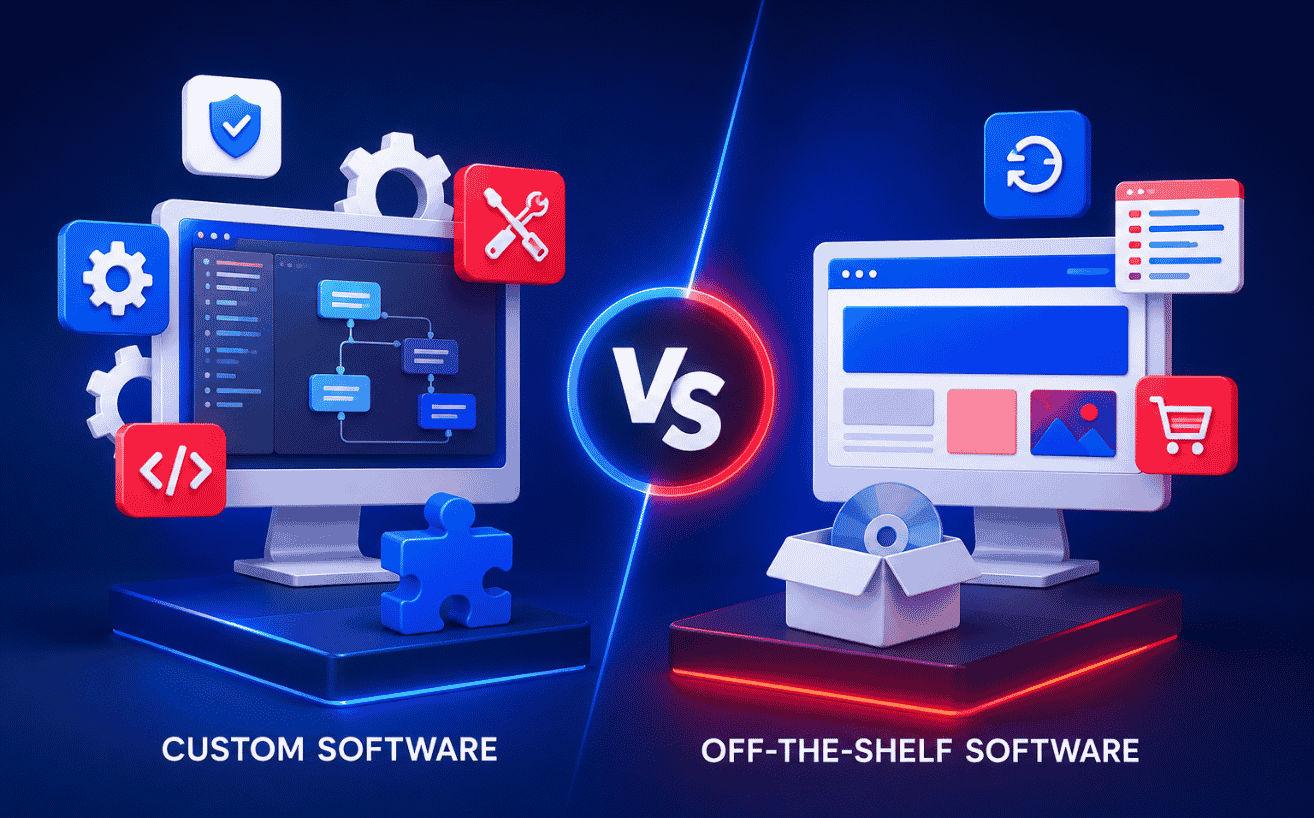
Businesses today rely heavily on software to manage operations, improve productivity, automate tasks, and deliver better customer experiences. But when choosing a software solution, many companies face a common challenge: should they invest in custom software or use an off-the-shelf product?
Both options offer advantages, but the right choice depends on your business goals, operational needs, and future growth plans. While ready-made software can work well for basic requirements, growing businesses often need more flexibility, scalability, and control.
Companies exploring long-term digital transformation strategies often invest in specialized solutions such as Business IT services to improve operational efficiency and supporting business growth.
What Is Custom Software?
Custom software is designed specifically for a business based on its unique workflows, challenges, and requirements. Instead of adjusting your operations to fit a generic platform, the software is built to support the way your business already works.
Custom software can be developed for:
- Workflow automation
- Customer management
- Inventory tracking
- Enterprise operations
- Reporting systems
- Internal communication
- Data management
One of the biggest benefits of custom software is flexibility. Businesses can add features, integrations, and functionality according to operational needs without relying on unnecessary tools or limitations.
Custom solutions are commonly used by enterprises, healthcare organizations, logistics companies, financial firms, and growing businesses with complex operations.
What Is Off-the-Shelf Software?
Off the shelf software is a ready-made solution designed for a broad group of users. These platforms are created to solve common business challenges and are usually available through monthly or yearly subscriptions.
Examples include:
- Accounting software
- CRM tools
- Project management platforms
- Communication software
- Marketing automation systems
Many businesses choose off the shelf software because it is easy to implement and requires less initial investment. Companies can usually start using the software immediately without waiting for development or customization.
However, these solutions are built for general business use cases, which means they may not fully align with specific operational requirements.
Custom Software vs Off-the-Shelf Software: Key Differences
Flexibility Custom software is tailored according to business requirements. Every feature and workflow can be customized to improve operational efficiency.
Off the shelf software offers limited customization. Businesses often need to adjust their internal processes to match the software's structure.
Cost
Off the shelf software usually has lower upfront costs because businesses pay subscription fees instead of development expenses.
Custom software requires a higher initial investment, but businesses gain ownership and avoid long term licensing costs.
Scalability
Custom software can grow with the business. Companies can add new features, users, and integrations whenever operational needs to change.
Off the shelf software may become restrictive as businesses expand, especially when additional customization or advanced workflows are required.
Security
Custom software provides stronger control over security because it is designed specifically for one organization and its requirements.
Off the shelf software is used by many businesses, making it a more common target for security vulnerabilities and large-scale attacks.
Integration Capabilities
Custom solutions can integrate smoothly with existing business systems and third-party applications.
Off the shelf software may require additional plugins or manual processes to connect with other tools.
Cost Comparison: Which One Is More Cost Effective?
Many businesses initially choose off the shelf software because it appears more affordable. Monthly subscriptions often seem manageable, especially for startups and small businesses.
However, long term costs can increase significantly through:
- Subscription renewals
- User based pricing
- Premium feature charges
- Integration costs
- Third party add ons
Custom software requires a larger upfront investment, but it can provide stronger long-term value. Businesses own the platform and have complete control over upgrades and future improvements.
For growing companies, custom software often delivers better long-term ROI because it supports automation, scalability, and operational efficiency without recurring licensing expenses.
Which Option Is Better for Business Growth?
As businesses grow, software requirements become more complex. Teams expand, workflows change, customer demands increase, and data management becomes more challenging.
Custom software supports business growth more effectively because it can evolve alongside operational needs. Businesses can continuously improve the platform without changing systems entirely.
Off the shelf software works well for companies with standard workflows and basic operational requirements. However, many businesses eventually experience limitations such as:
- Restricted customization
- Integration challenges
- Limited scalability
- Workflow inefficiencies
- Higher ongoing subscription costs
This is one reason many companies move toward tailored technology solutions and enterprise focused IT strategies as they scale operations.
Common Challenges Businesses Face With Off-the-Shelf Software
Limited Features
Businesses often pay for features they never use while lacking the exact functionality they actually need.
Recurring Costs
Subscription based pricing increases as businesses add users, storage, or advanced features.
Integration Issues
Connecting multiple software tools can become difficult and may require manual work or additional systems.
Lack of Full Control
Businesses depend on third party vendors for updates, pricing changes, support, and feature availability.
When Should a Business Choose Custom Software?
Custom software becomes the better option when businesses:
- Have complex workflows
- Need process automation
- Require advanced security
- Want scalable solutions
- Need multiple integrations
- Plan long term growth
- Want complete operational control
Businesses with unique operational requirements often benefit the most from custom software development because the solution is designed around their exact goals.
Final Verdict: Which Software Solution Is Better?
The right choice depends on the size of the business, operational complexity, budget, and future growth plans.
Off the shelf software is suitable for businesses with simple workflows, limited budgets, and immediate deployment needs.
Custom software is a stronger option for companies looking for scalability, flexibility, stronger security, and long-term operational efficiency.
Businesses focused on sustainable growth often find that custom software provides better long-term value because it aligns directly with operational goals instead of forcing teams to work around software limitations.
Conclusion
Choosing between custom software and off-the-shelf software is an important business decision that affects productivity, efficiency, scalability, and long-term growth.
While ready-made software offers convenience and faster implementation, it may create limitations as business operations evolve. Custom software provides greater flexibility, stronger integrations, and better control over business processes.
Before investing in any software solution, businesses should evaluate their current challenges, long term goals, and future scalability requirements carefully.
Talk to Our Software Experts
Not sure which software solution is right for your business? Talk to our software experts to discuss your business requirements, operational challenges, and long-term growth plans. Our team can help you choose a solution that supports efficiency, scalability, and future success.
Talk to Our ExpertsUday Tanwar
Uday Tanwar is the CEO of BYXL Software, where he leads a team focused on building custom software, mobile apps, web platforms, and business automation solutions. With years of experience in technology strategy and digital product development, he helps businesses turn ideas into practical, scalable systems that support long-term growth. His expertise includes software consulting, process optimization, and delivering user-focused solutions for startups, small businesses, and growing enterprises. Through his leadership, BYXL Software continues to deliver reliable technology solutions tailored to modern business needs.